
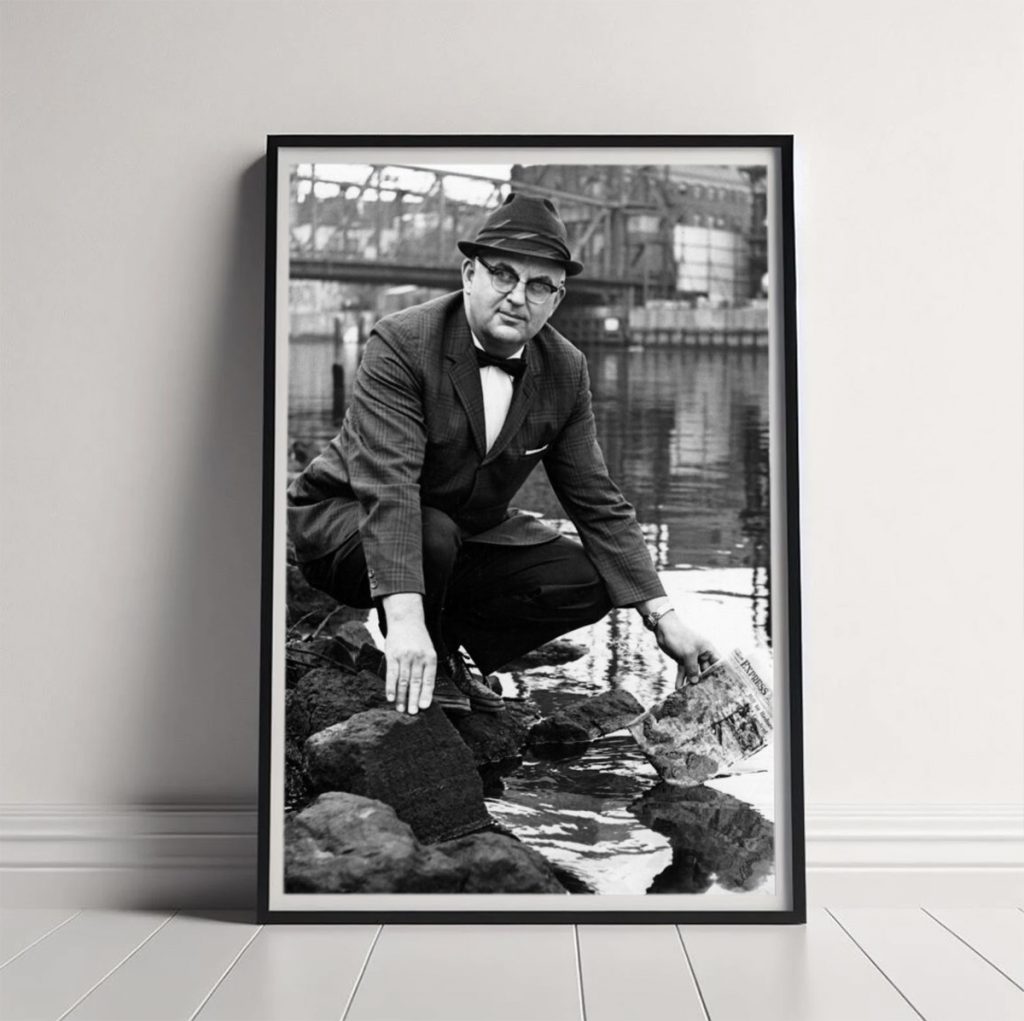
Stanley Spisiak
Jeweler
conservationist
environmental activist
About Stanley Spisiak
Stanley Spisiak: Buffalo’s Unsung Environmental Hero
Long before climate change and pollution became urgent global topics, Stanley Spisiak was hard at work fighting to protect Buffalo’s waterways. Known as “Mr. Conservation” and “Mr. Buffalo River,” Spisiak was a jeweler by trade, but his true calling was as an environmental activist. His tireless efforts to clean up the Buffalo River, Lake Erie, and other waterways not only transformed the city but also impacted national environmental legislation. Stanley’s story is one of passion, determination, and a deep love for the natural world—a true testament to the power of one person to spark change.
Early Life and a Growing Passion for Conservation
Born on April 20, 1916, in Buffalo, New York, Stanley Spisiak grew up as the youngest of 16 children in a working-class Polish immigrant family. Losing both his parents by the age of 16, young Stanley learned resilience early on. His childhood explorations of Buffalo’s rural spaces and waterways ignited a love for nature that would shape his life.
After a stint in the Civilian Conservation Corps, Stanley worked at the Buffalo Museum of Science, where he was introduced to gemology. With a small loan, he opened a jewelry store in Buffalo’s Kaisertown neighborhood, operating it for nearly 40 years. But behind the polished display cases and sparkling gems was a man deeply troubled by the environmental degradation he witnessed in Buffalo’s rivers and lakes.
The Fight to Save Buffalo’s Waterways
During the mid-20th century, Buffalo’s waterways—once teeming with life—had become dumping grounds for industrial and municipal waste. The Buffalo River, in particular, was declared biologically dead due to oil slicks, chemical spills, and widespread pollution. For most people, this seemed like the cost of industrial progress, but Stanley Spisiak saw the long-term consequences of inaction.
Armed with a self-taught expertise in water chemistry and fishery biology, Spisiak began his crusade to save Buffalo’s waterways. He spoke out—often bluntly—against companies like Republic Steel and Socony-Vacuum, as well as the U.S. Army Corps of Engineers, which were major polluters. His dedication earned him media attention, and he wasn’t afraid to confront those in power.
National Spotlight and Presidential Action
Spisiak’s activism reached a turning point in the 1960s when he attracted the attention of notable politicians like Senator Robert F. Kennedy and Congressman Max McCarthy. Spisiak even hosted Kennedy on a boat tour of the Buffalo River, exposing him to the dire state of the city’s waterway.
His determination culminated in 1966 when he was named “Water Conservationist of the Year” by the National Wildlife Federation. At a dinner in Washington, D.C., Spisiak shared a table with First Lady Lady Bird Johnson. Using his characteristic candor, he invited her and President Lyndon B. Johnson to Buffalo to see the pollution firsthand.
True to his word, President Johnson visited Buffalo in August 1966, during which Spisiak pulled out a bucket of sludge from the Buffalo River to show the horrific state of its pollution. When Spisiak explained that 175,000 cubic yards of contaminated sediment were being dumped into Lake Erie annually, LBJ famously exclaimed, “Why, those bastards!” Shortly thereafter, the president signed an executive order mandating safer disposal methods—landmark progress in the fight against water pollution.
Challenges and Triumphs
While Spisiak’s efforts yielded some significant victories, the fight to clean Buffalo’s waterways was far from over. The Buffalo River caught fire in 1968 due to an oil slick—a grim reminder of how much work remained. Despite these setbacks, Spisiak didn’t give up. His public speeches, testimony before Congress, and relentless advocacy helped shape future environmental policies, including the historic Clean Water Act of 1972.
Stanley faced challenges as a no-nonsense activist. His outspokenness made him a target, and he even carried a pistol for protection after being roughed up for his environmental crusades. Yet, his unpolished but passionate personality made him an unforgettable figure, and his contributions laid the groundwork for Buffalo’s environmental revitalization.
A Legacy That Endures
Today, it’s hard to imagine Buffalo’s waterfront without recreational boaters, kayakers, and bustling public spaces like Canalside. Much of this revival can be traced back to Stanley Spisiak’s early activism. His vision and work saved Lake Erie and catalyzed the restoration of the Buffalo River, which is now filled with fish and attracts nature enthusiasts from across the region.
Spisiak’s legacy lives on through organizations like Buffalo Niagara Waterkeeper, which named its Legacy Society in his honor. His story also serves as a reminder that one person can indeed make a difference, even in the face of overwhelming odds.
Stanley Spisiak passed away in 1996, but his lifelong dedication to conservation made him a cherished figure in Buffalo’s history. He proved that protecting the environment is not only possible but essential, and his work continues to inspire new generations of activists.
For a city that owes so much to its waterways, Stanley Spisiak remains a timeless symbol of Buffalo’s resilience and a true environmental hero.