
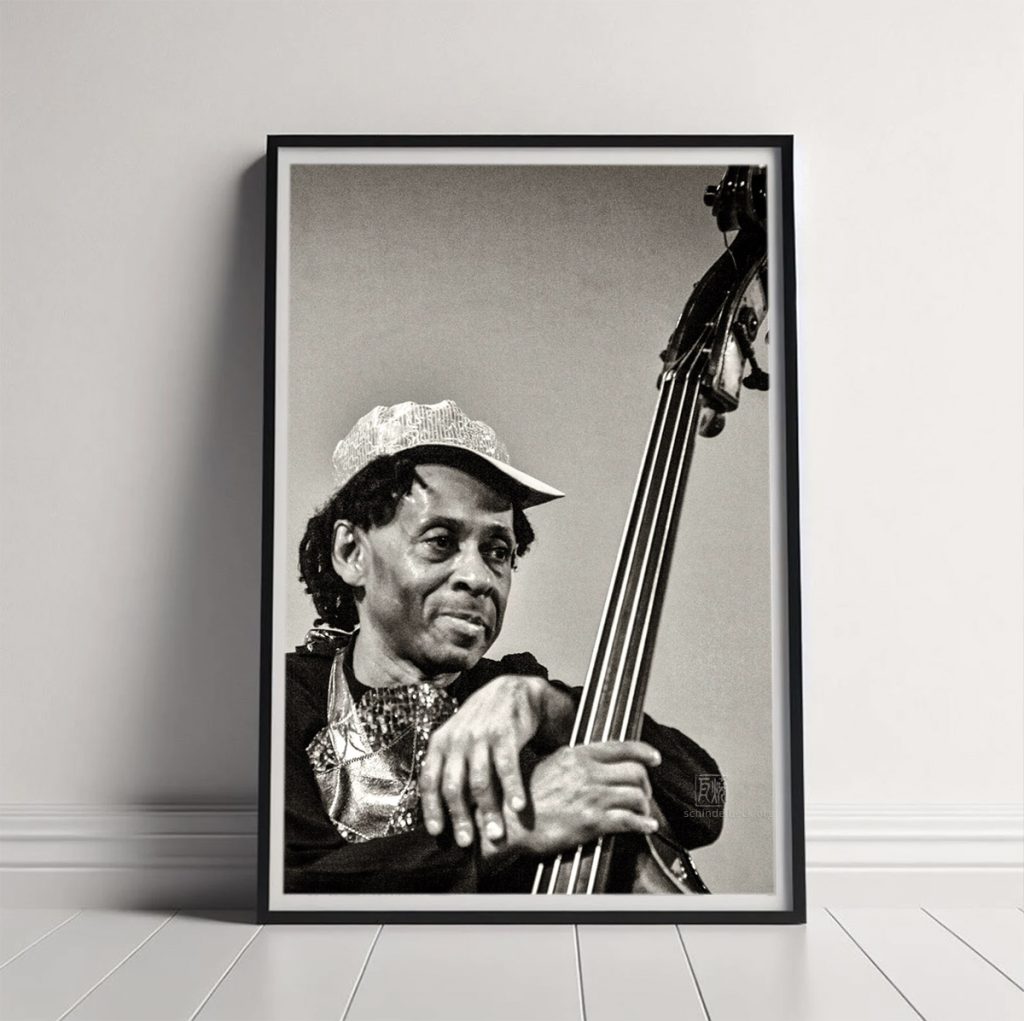
Juini Booth
Music artist
Jazz
About Juini Booth
Juini Booth – Buffalo’s Jazz Visionary
Buffalo, NY, has long been a cradle for talent, and one of its most distinguished musical sons is Juini Booth. Born Arthur Edward Booth Jr. on February 12, 1948, Juini was a jazz bassist whose artistry and innovation left an enduring impact on the genre. Known for his versatility on both the double bass and electric bass, Booth’s career is a testament to the power of music to bridge cultures and influence generations.
Early Life and Musical Beginnings
Juini Booth was born and raised in Buffalo, where his musical story began. Starting on piano at the age of eight, he transitioned to the cello before finding his true voice on the bass at just 12. Booth’s musical development flourished in Buffalo’s music-rich environment. He played in string classes at East High School and later with the orchestra at Lafayette High School, demonstrating an early aptitude for rhythm and melody.
Despite the loss of his parents when he was just 13, Booth’s passion for music remained steadfast. He began playing in local bands, honing his craft and laying the foundation for a career that would take him to some of the most prestigious stages in the world. His first professional performances were alongside Buffalo jazz legend Chuck Mangione in the mid-1960s.
By 1966, Juini’s talent propelled him to New York City, the epicenter of jazz, where he would launch an extraordinary career collaborating with some of the biggest names in the industry.
Collaborations with Jazz Legends
Juini Booth’s ability to seamlessly meld with different styles and his deep understanding of the jazz idiom made him a sought-after bassist. Early in his career, he shared the stage with artists such as Eddie Harris, Art Blakey, and Freddie Hubbard. His versatility and deep groove allowed him to excel in diverse jazz ensembles, from intimate trios to avant-garde collectives.
One of Booth’s most notable collaborations was with Sun Ra, the visionary bandleader and pioneer of Afrofuturism. Starting in 1967, Booth became one of the longest-serving members of the Sun Ra Arkestra, contributing to its signature cosmic sound. His work with Sun Ra showcased his ability to push the boundaries of jazz, blending tradition and experimentation in ways that captivated audiences.
Booth also became a key member of Tony Williams’ Lifetime and worked with jazz luminary McCoy Tyner in the 1970s. His contributions to Tyner’s “Enlightenment” and “Atlantis” albums highlight his ability to anchor complex compositions with both power and finesse. Over the course of his career, Booth also played with icons like Elvin Jones, Larry Young, Chico Freeman, and Shelly Manne, leaving his mark on an extensive array of classic recordings.
Returning to Buffalo, Giving Back to His Roots
After years of touring, recording, and performing with jazz greats, Juini Booth returned to his roots, re-establishing his presence in Buffalo’s music scene. He immersed himself in the local community, performing in small clubs and mentoring young musicians. Booth’s connection to Buffalo remained steadfast throughout his life—while his career took him around the globe, his hometown was always a place of grounding and inspiration.
Booth’s dedication to his hometown was further reflected in his participation in local events and projects. His unwavering commitment to Buffalo and Western New York helped foster a growing jazz culture and encouraged emerging talents in the region.
A Lasting Legacy in Jazz
Booth’s style captured the essence of jazz, blending melodic creativity with rhythmic mastery. Whether playing in traditional bebop settings or exploring the cosmic sounds of Sun Ra, Booth brought an unmatched depth to his music, rooted in both technical proficiency and heartfelt emotion.
Juini Booth’s impact on jazz goes beyond his recordings and performances. His partnerships with genre-defining figures like McCoy Tyner, Sun Ra, and Tony Williams meant that his playing shaped the evolution of jazz over decades. His precision on the bass became synonymous with excellence, solidifying his role as a key figure in jazz history.
Posthumous Recognition and Ongoing Influence
Juini Booth passed away on July 11, 2021, at the age of 73, leaving behind a catalog of groundbreaking work. His contributions to timeless recordings, such as “Atlantis” and “Pressure Cooker,” continue to inspire musicians and jazz enthusiasts alike.
His legacy lives on in Buffalo’s cultural landscape, where his name is synonymous with musical excellence. Posthumous tributes have celebrated Booth not just as an extraordinary musician but also as a generous mentor and cultural ambassador. Efforts to honor his contributions, including showcases of his work and educational initiatives, keep his spirit alive in the jazz community.
Closing Thoughts
Juini Booth was more than a bassist—he was a storyteller who used music to connect hearts and minds. From Buffalo’s vibrant neighborhood stages to the world’s elite jazz venues, his life and work embodied a passion for innovation, creativity, and community.
Buffalo claims many talented artists, but Juini Booth remains a special figure—one whose music crossed boundaries and whose influence continues to resonate. For jazz lovers, his work is a reminder of Buffalo’s rich musical heritage and the universal power of jazz. Juini Booth truly represents the soul of Buffalo, and his contributions will be celebrated for generations to come.