Review by Steven Maisonet
Produced by Road Less Traveled Productions, Dial M for Murder is a new version of the celebrated murder mystery that inspired Hitchcock’s masterpiece. Jeffrey Hatcher’s adaptation of the classic suspense thriller is a smart, tight, compelling update of Frederick Knott’s tale of jealousy, deception, and homicide.
Tony is convinced that his wife Margot has been cheating on him. Now, it seems that the affair is over, but in his jealousy, Tony spins a web of suspicion and deception that will tighten around them and ensnare them both in danger, recrimination, and murder.
–
I was recently asked the dreaded theater question: What is your favorite theater production? This question always stumps me—not because I have no favorites, but because, unfortunately, my categorization of theater works a bit differently. It’s no secret that, by trade, I am a social worker. The added benefit of theater for me is perhaps the deep emotional psychoanalysis that unconsciously occurs as I process the elements of the performance. From the diverse perspective I hold, I see no groupings in theater elements beyond the story they are conveying on stage and the quality of work being delivered, stepping outside of the comfort need for genres. However, for the sake of appeasing gentle readers, classic genre categorization is helpful when deciding what show to see on a night out.
In the realm of genre, Dial M for Murder is a classic “Murder Most Foul” and a cozy mystery within the world of classic murder mysteries. Although the audience is in on the mystery and the characters are not (assuming the actors convey no recollection of how the show plays out), it still retains the charm of a classic whodunit.
What made this show particularly interesting and fantastic was the fact that it was set in 1952 England, making it revolutionary and politically relevant given the geopolitical climate of the time. The historical context is important: in 1952, LGBTQ+ rights and violence were at an all-time high, with constant discrimination, harassment, and the outlawing of same-sex relationships. Take, for example, the event involving English theoretical biologist and computer scientist Alan Turing. In 1952, Turing was prosecuted for “gross indecency” and forced to undergo hormone castration to avoid imprisonment for being in a consensual same-sex relationship. Similar events were occurring in the 1950s, when underground networks became exclusive to the LGBTQIA+ community to prevent ongoing discrimination. London, like cities such as San Francisco and New York in the USA, pushed for equal rights but was met with ongoing threats and violence to silence and marginalize its LGBTQ+ citizens.
Dial M for Murder, adapted by Jeffrey Hatcher from the eponymous screenplay by Frederick Knott, was originally a 1952 episode of the BBC’s Sunday Night Theater, starring English actors Elizabeth Sellar and Emrys Jones. It gained accredited recognition as a stage adaptation at the Victoria Theatre in London, starring Jane Baxter, later known for her role as the Dowager Lady Newbury in the ITV 1971 television series Upstairs, Downstairs, which inspired the critically acclaimed Downton Abbey, and was later popularized in Alfred Hitchcock’s 1954 American crime thriller film, starring Grace Kelly and Ray Milland. Playwright Jeffrey Hatcher controversially created a rabid conversational piece in his adaptation of Knott’s Dial M for Murder, sparking a deeper, long-lasting conversation about the intentionality behind the gender swap of Mrs. Wendice’s secret lover, Max Halliday—now adapted as Maxine Hadley in this production. This change may ignite a conversation about why one might protect their identity for the sake of status and to avoid public ostracization, particularly in the British context of 1952 London. This production brings these historical correlations to light, especially through Margo Wendice’s (played by Kate LoConti Alcocer) secret relationship with Maxine Hadley (played by Kristen Tripp Kelley), which is later used as a means to ransom £5,000 to prevent the exposure of their sexual identities, which could lead to public shame as members of the LGBTQIA+ community and their secret affair.
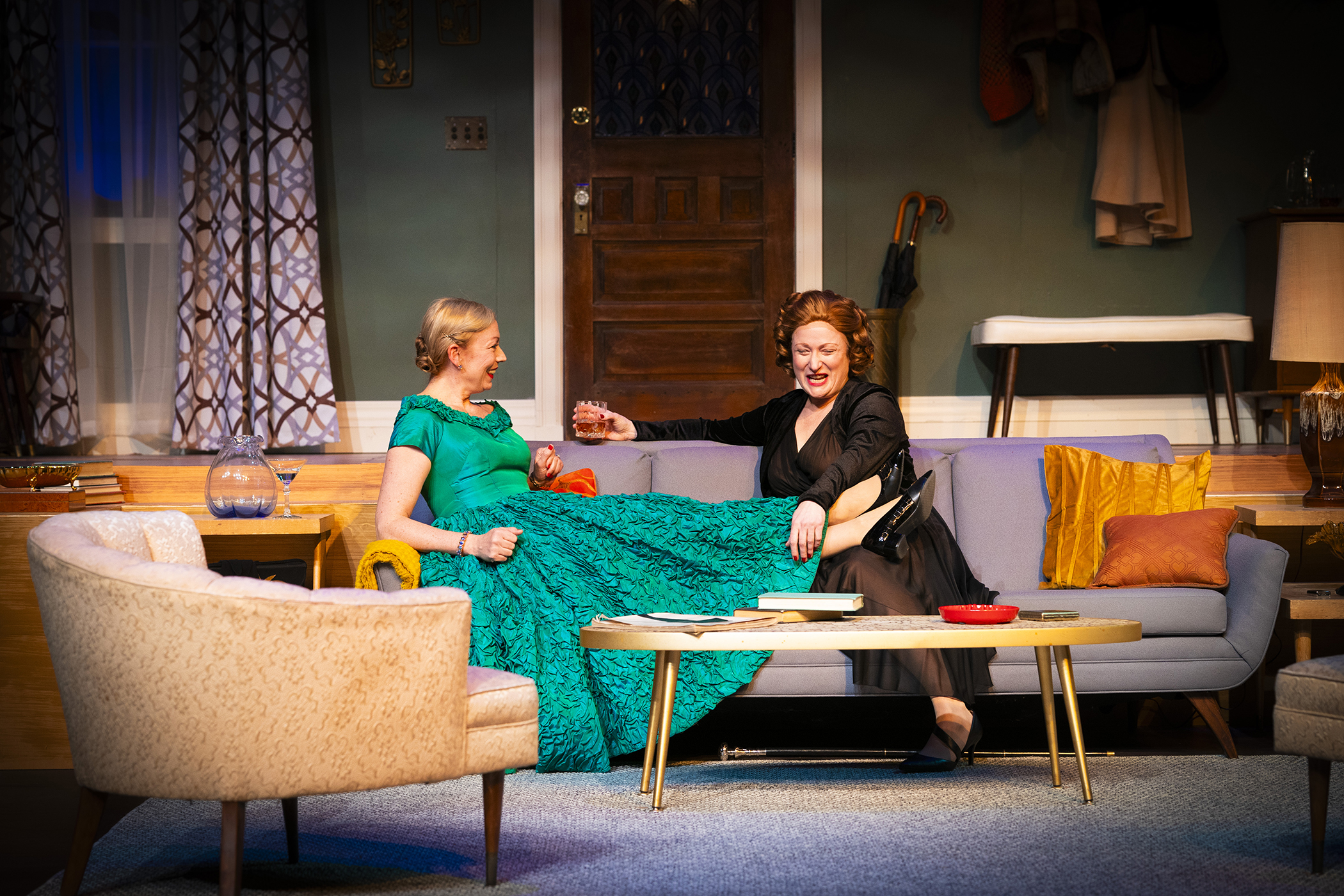
This star-studded, Artie-winning cast was masterfully crafted by the talented Robyn Lee, who was first introduced to this writer in her memorable rendition of Adult Alison in MusicalFare’s 2019 Fun Home, the last show this writer saw before the global pandemic shutdown. To this day, I still talk about the high quality of this show. Robyn Lee, as a director, continues to build hype and momentum as a performer, artist, and director, bringing this adaptation of Dial M for Murder all the way to the 710 Mainstage Space. Lee’s scenic vision was brought to fruition by set designer Dyan Burlingame, creating a scenic atmosphere of a 1950s chic and minimal flat (flat being the British term for an apartment, not the physical space). The stage’s most striking moment was the lower pit-like level, accessed by actors via steps. Lee delivered a directorial masterpiece, combining scenic ambiance, comedic humor, and auspiciously spaced moments of laughter and mystery, making the experience all the more enjoyable for the audience and fully immersing them in this murder mystery production, all while staying authentic to the crime thriller element of the show.
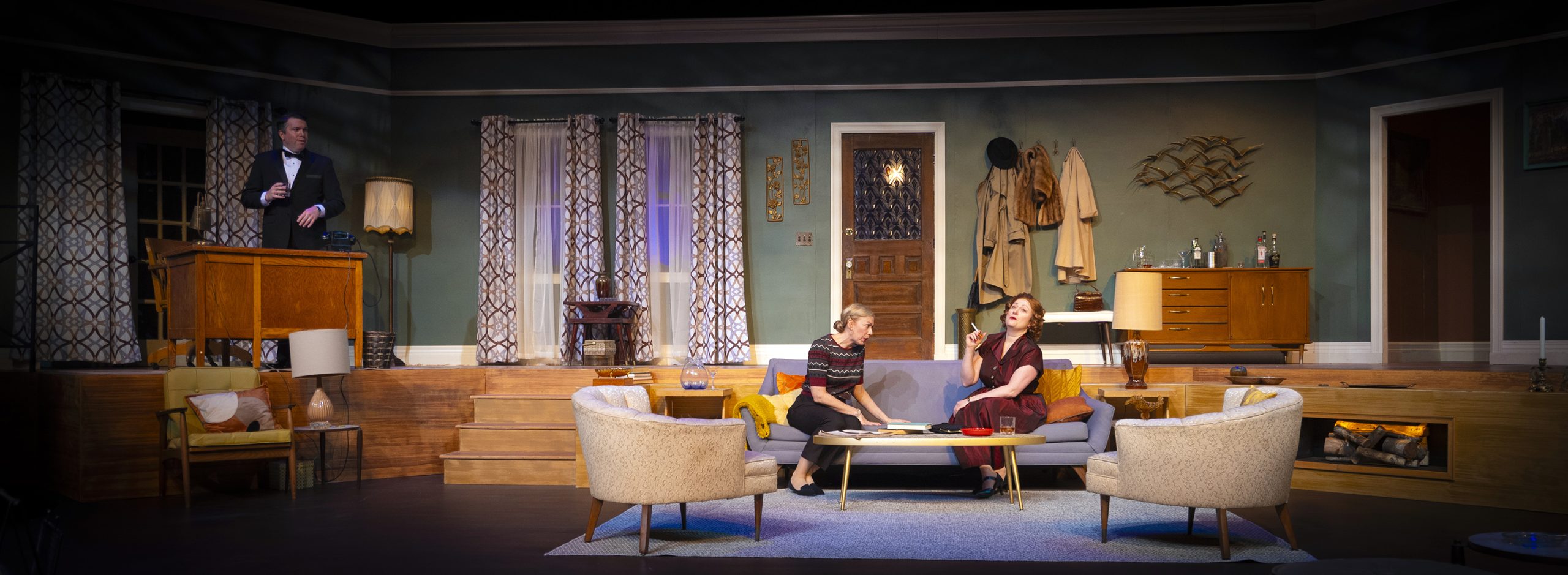
Margo Wendice, played by Equity member and Artie Award winner Kate LoConti Alcocer, delivers a high-class performance. LoConti’s portrayal is charismatic and playful, perfectly capturing Mrs. Wendice’s role as the unfortunate victim of her husband, Tony Wendice’s (Steve Copps) cynical plan—both failed and re-attempted. She brings a comforting presence to the stage, filling this role with fast-paced, manic energy while maintaining balanced dialectical temperance, showcasing her charming British accent—a role truly fitted to an expert artist. Margo Wendice, who finds herself entrapped in this crime gone wrong, is exposed to the rigors of her own legal defense after surviving the attempted murder by her assailant Lesgate (Adam Yellen), a novice hired hitman employed by Copps’ character, Tony Wendice. Perhaps what made this role more authentic to the 1952 setting was LoConti Alcocer’s portrayal of Margo, particularly her frightened reaction and willingness to aid the blackmailer’s extortion of money. This is an accurate depiction of this character, given the social sexual identities of the set period—although it is later revealed that the amount in question is used as a means to compensate Yellen’s character, Lesgate, for orchestrating the failed assassination.
However, prior to the introduction of these aforementioned characters, we are first introduced to copious Maxine Hadley (Kristen Tripp Kelley), the show’s resident murder mystery author and love interest for Tripp Kelley’s character, Margo Wendice; whose impressive alphabetization of murder types is deployed in her attempts to charm the lovestruck Margo as she flirtatiously inquires how Tripp Kelley’s character would hypothetically murder her— a comforting homage to the original Knott “Max Halliday” character. Tripp Kelley, who is the only American portrayed character in the cast, delivers a signature well-studied ‘feminist’ tough and brooding character who is often presented in femme-noir attire, all while holding a cigarette and bourbon in hand. I suppose when you are an author of a morbid topic, these elements only add to your morbidity in character. Tripp Kelley’s performance could be considered a perfect example of gender-blind casting, adding flair to the production and possibly offering a subtle allegorical interpretation of the layered murder mystery, all while staying authentic to the story’s plot. Her empathy and compassion for her lover are conveyed through caring mannerisms and a daring onstage kiss, while Mr. Wendice is unaware and present due to plotting his discourse in his wife’s undoing. These characters’ strained, secretive relationship is brought to a lighthearted pace while maintaining the sincerity of the murder mystery element, encompassing the genius of a love triangle and thickening the plot.
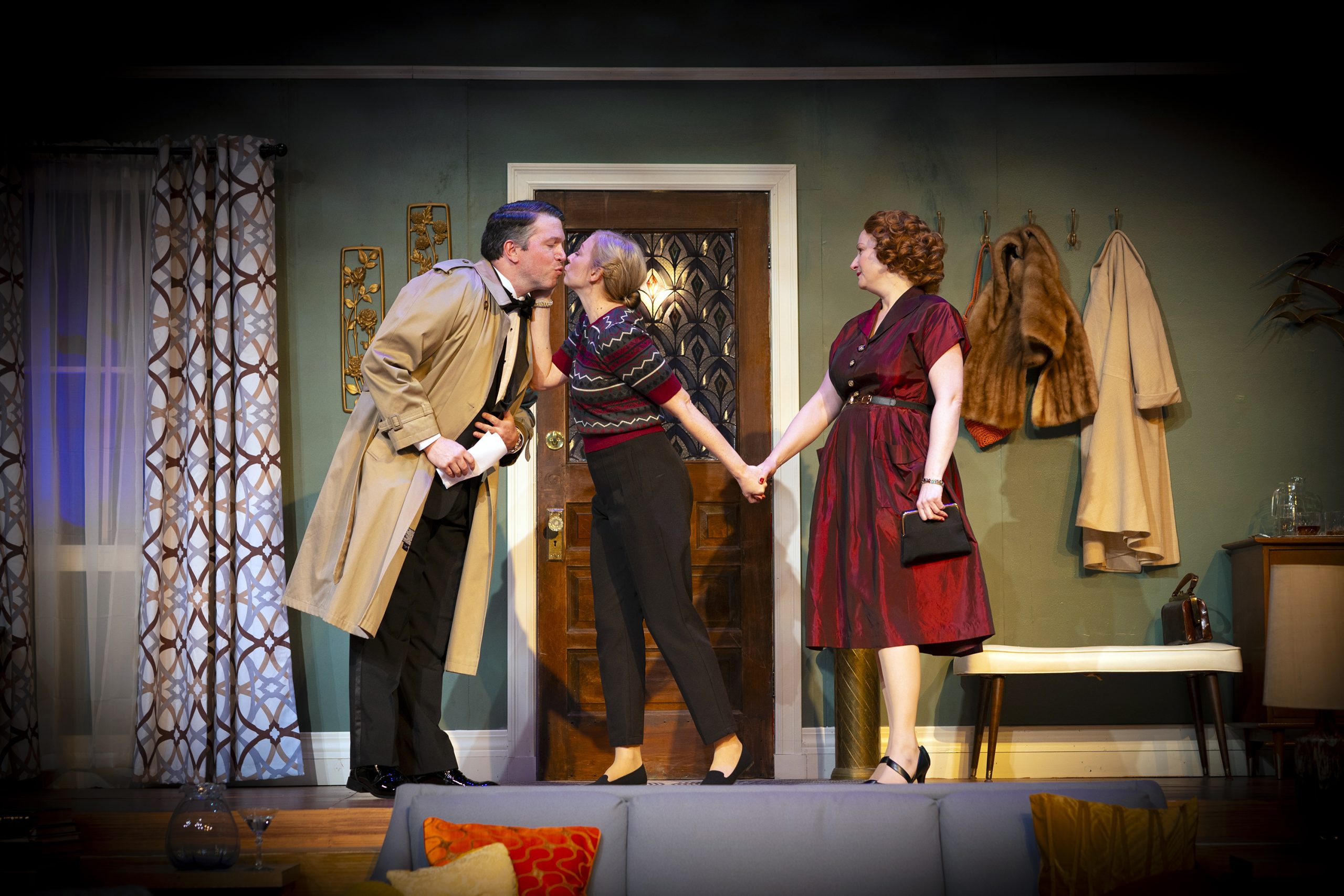
We are later introduced to Tony Wendice (Steve Copps), the “patriarch” of the house, who finds himself amusing the covert relationship between his wife, Mrs. Wendice, and Ms. Hadley. Copps, who plays this role in a playful, foreboding, and vindictive manner, is soon left alone on stage as he graciously pretends to play a limited-mobility character for Lesgate (Adam Yellen), in hopes of convincing Lesgate to aid and abide by his murderous plan. While Copps is undeniably the antagonist of this story, he manages to swoon the audience with his charismatic and friendly demeanor, making it hard for the audience to disregard his plot to end his wife’s life for the sake of her monetary will. As the scene between Yellen and Copps plays out, it is revealed that Copps’ character has masterminded the whole interaction and blackmailing plot, persuading Lesgate to act out his crime in hopes of fulfilling his money-hungry plan to gain his wife’s money—although it was never revealed what his motivating goal was beyond just gaining money, perhaps an oversight that was meant to ignite curiosity in the audience’s interpretation of the murder mystery.
From a critical note, I didn’t see much meaning behind Mr. Wendice’s false representation of appearing to be handicapped or frail. Unfortunately, it felt as if playwright Jeffrey Hatcher had no deeper reason for this, aside from creating the illusion for Lesgate that Copps’ character might be fragile and unable to carry out his own plan—though it added no real benefit to the plot. Nevertheless, Copps delivers a fantastic portrayal of this character, hitting the mark on all his line deliveries and enhancing the illustrious adaptation of this dark comedic show.
Lesgate (Adam Yellen), who unfortunately finds himself to be the victim of his own crime (although briefly gracing the stage—RIP), delivered a motivating role in his pursuit to balance and perhaps re-extort Mrs. Wendice, as he attempted to seek an alternative solution to Mr. Wendice’s murderous plot and wipe his hands of engaging in a crime. Yellen undoubtedly delivers a drop-dead performance, especially as the heated stage coordination of him maneuvering the attempted restraint of LoConti Alcocer’s character, both actors delivering an edge-of-the-seat experience. As the show progresses, the audience members are faced with the challenging juxtaposition of uncovering how the story will play out, with Mr. Wendice, again, appearing to be one step ahead—so we think—as he recovers from his failed attempt by creating a debacle of miscalculated steps to shift the blame onto his wife and come out unscathed in this murderous attempt. As they say, “If you’re going to screw up, might as well do it in style,” and that’s precisely what Copps’ character does as he again masterminds the attempt to make it seem like LoConti Alcocer’s character was at fault and in decision of her own altercations.
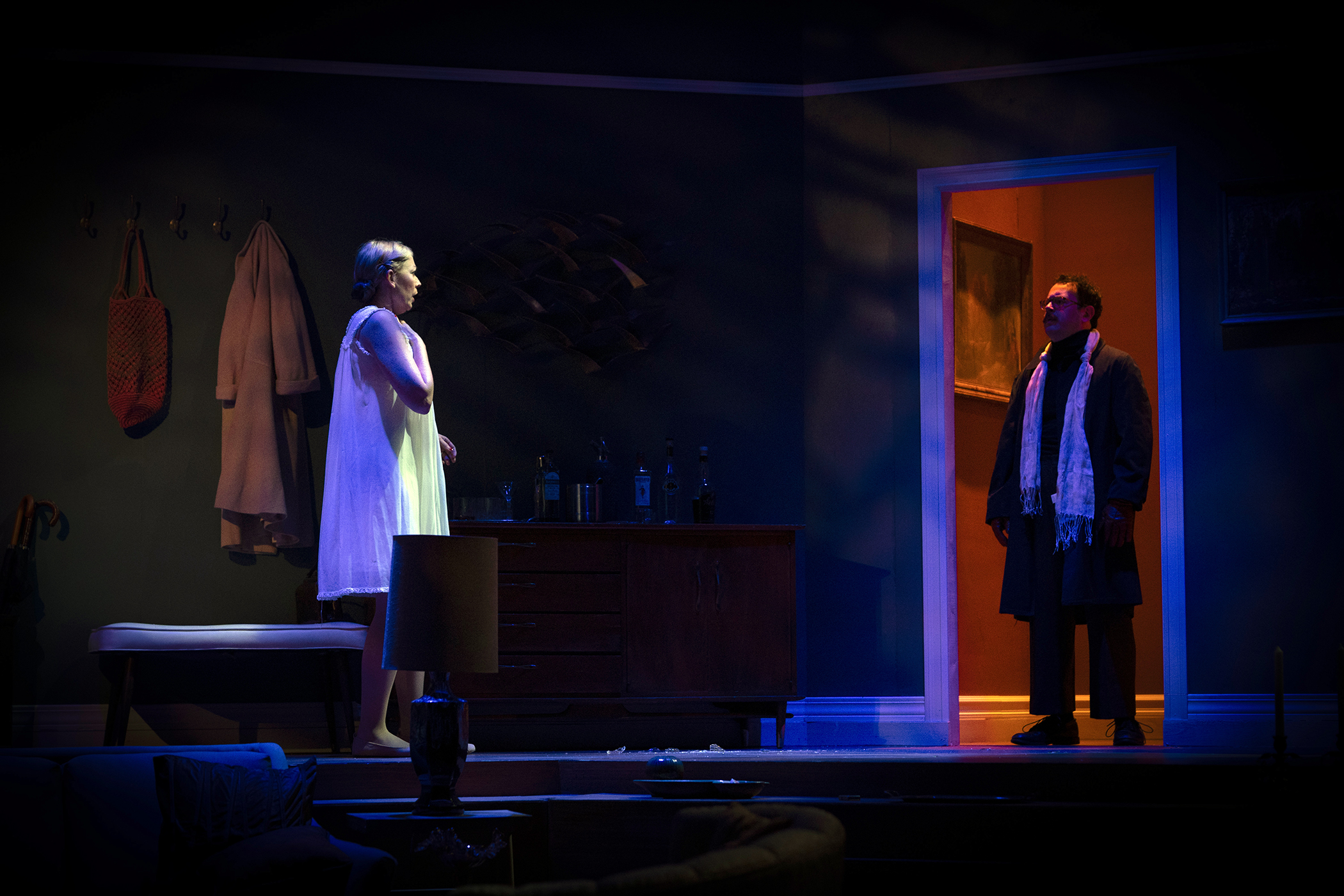
Fortunately, considering that this show has a resident author who is an expert in murder mysteries, Maxine Hadley works in conjunction with Inspector Hubbard (Todd Benzin), later introduced in Act 2, to correct the overlooked clues missed during the initial investigation in hopes of exonerating Mrs. Wendice from her husband’s falsely orchestrated crime. On this continued note, a wonderful Easter egg for those who might have missed it during the intermission break was the stagehands acting as investigators, cleaning and preparing for Act 2. Kudos to stage support for continuing this crime scene narrative.
In Act 2, we are introduced to Benzin’s character, who delivers a more serious role as Inspector Hubbard. Known for his improvisational skills (seen at RLTP’s Unscripted, and Alleyway’s Babushka), Benzin adds a subtle comedic element while portraying a more conventional investigator who uncovers his suspicion of Mr. Wendice’s involvement after being provided with an alternative theory by Ms. Hadley. This production, again, masterfully delivers what feels like a quick-paced cat-and-mouse crime thrill for the audience and meets every criterion for enthusiasts of a classic murder mystery. Road Less Traveled Productions’ Dial M for Murder is a must-see and a must-talk-about show. It cleverly appeals to both a young and adult audience, perfect for those seeking a thrilling night out in Downtown Buffalo’s Theater District. This wonderfully well-put-together show delivers charm, humor, suspense, and action, all while giving a visually pleasing set design and technical charm, thanks to production team members Dyan Burlingame (set design), John Gromada (music composer), Kevin Faulhaber (sound design/coordinator), Nicholas Quinn (lighting design)—a very useful element in this production, with mood-setting and adding eerie elements to the murderous scenes between Yellen and LoConti Alcocer’s altercation—Kari Drozd (costume design), and Audrey Grout (wardrobe), who brought these vivacious characters to life with their authentic styling of 1950s pleated pants, especially on LoConti Alcocer’s character, Margo Wendice, who never failed to fashionably impress on stage with her stylized attire, and Maxine Hadley’s elegance in fashion and dresses, delivering high class and sophistication, as well as utilizing clothing to signify seasonal timing, Mr. Wendice’s light tan trench coat, and Inspector Hubbard’s trench coat—signifying that perhaps it is springtime in 1952 London. Diane Almeter Jones (properties master) is to be thanked for the onstage glass shatter that caused anxiety as actors would step over, especially during the coordinated stage fight directed by fight director Shelby Converse. And lastly, appreciation for stage technicalities by Sarah Foote (production stage management), Matt Myers (assistant stage manager), Anthony D’Avanzo (assistant technical director), Lou Iannone (technical director), and Hasheen DeBerry (production coordinator).
Oh, and for those wondering what my favorite theater show is, it’s Aida (1998), the musical written by Tim Rice and Elton John, starring the incomparable Heather Hedley, Sherie Rene Scott, and Adam Pascal. This show has always held a special place in my heart because it was introduced to me by the late legend herself, Lorna C. Hill, founder of Ujima Theater, when I was a student at the Buffalo Academy for Visual and Performing Arts. In addition to being introduced to the musical, I was also fortunate to view the professionally filmed opera at the Metropolitan Opera—one of my first ever fond memories of my admiration for theater.
Shea’s Performing Arts Center and Road Less Traveled Productions (RLTP) announce the start of Dial M for Murder at Shea’s 710 Theatre. The three-week engagement includes 12 performances beginning March 27 and running through April 13, 2025.
Dial M for Murder is Road Less Traveled Theatre’s 7th production featured on the stage at Shea’s 710 Theatre. The theatre company’s home is located at 456 Main Street in Buffalo, right down the street from the Shea’s Performing Arts Center campus. For more information on Road Less Traveled Theatre shows and events visit: https://www.roadlesstraveledproductions.org/.
Tickets to Dial M For Murder are available at the Shea’s Box Office at 650 Main Street or online at: https://www.sheas.org/performances/dial-m-for-murder/.
Photos: (Credit: Vincent Lopez Photography)