
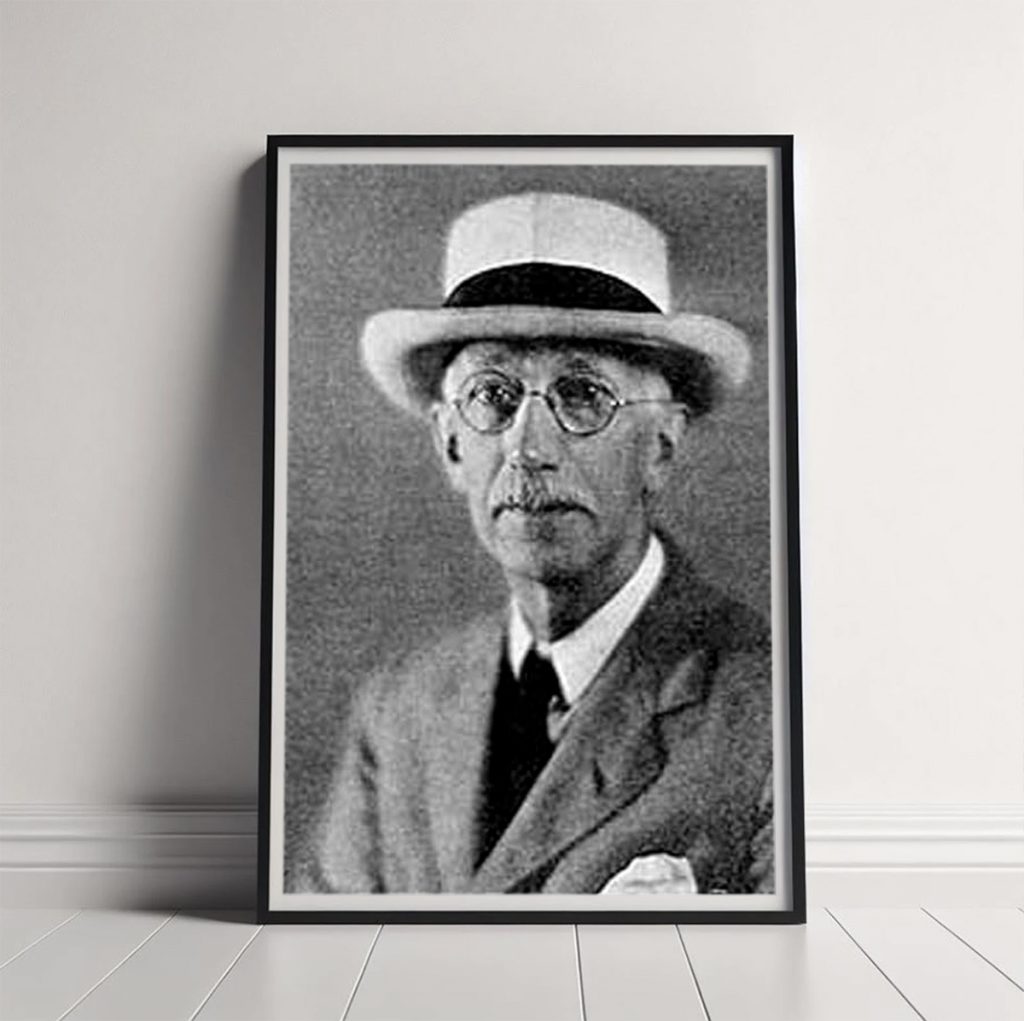
John J. Albright
Businessman
Philanthropist
About John J. Albright
John J. Albright: The Visionary Who Shaped Buffalo
Some individuals leave an undeniable stamp on the cities they touch, and for Buffalo, NY, John J. Albright is one of those people. A businessman, industrialist, and philanthropist, Albright’s profound impact on Buffalo’s industrial and cultural fabric is one that’s still palpable today. From harnessing the power of Niagara Falls to creating landmarks like the Albright Art Gallery, his legacy stands as a testament to ambition, community-minded vision, and generosity.
From Virginia Roots to Buffalo’s Industrial Core
Born in Buchanan, Virginia, in 1848, John J. Albright didn’t remain in one place for long in his quest to build a prosperous life. His early career in coal sales took him across states, but by 1883, his relocation to Buffalo proved to be a pivotal decision. Albright saw the city not just as a gateway to the west but as a place brimming with untapped potential for industrial growth.
It was this foresight that led him to play a pivotal role in one of Buffalo’s great industrial achievements—harnessing the power of Niagara Falls. His involvement in bringing hydroelectric power to the region through initiatives like the Ontario Power Company was more than innovative; it was transformational. Albright helped Buffalo stand out as a hub for progress and energy production, setting the stage for economic expansion.
Powering Buffalo, Shaping Industry
Albright didn’t stop at energy ventures. He facilitated the negotiations that relocated Lackawanna Steel to Buffalo, forever changing the city’s industrial landscape. The rise of steel production brought thousands of jobs and spurred Buffalo’s growth as a manufacturing powerhouse.
His focus wasn’t only on heavy industry. Albright invested in diverse business ventures, such as the Buffalo Bolt Company, which produced essential materials for trains, ships, and vehicles. He also played a significant role in banking and transportation, ensuring the city had the infrastructure it needed to thrive.
Building Buffalo’s Cultural Identity
What truly set John J. Albright apart was his belief in balancing progress with a focus on the soul of the city—its cultural heritage. Albright had a deep appreciation for the arts and recognized their significance in creating a well-rounded society.
His greatest contribution to Buffalo’s cultural landscape came in the form of the Albright Art Gallery. Established with a $350,000 donation (equivalent to over $12 million today), the gallery was initially planned as part of the Pan-American Exposition in 1901. Due to delays, the Greek revival-inspired gallery, designed by Edward B. Green, officially opened in 1905.
This magnificent structure, crafted entirely from white marble, is not only a stunning landmark but also a reflection of Albright’s vision for Buffalo. It provided a permanent home for the Buffalo Fine Arts Academy and became a beacon of creativity and inspiration for the community. His additional contributions to maintain and operate the gallery ensured its success well beyond his lifetime.
Albright’s Vision for Community
John J. Albright’s influence wasn’t confined to industry and the arts alone. He helped establish schools, churches, and community spaces in Buffalo, believing that strong education and public institutions were the foundation of a thriving city.
For instance, he was instrumental in bringing William Nichols to Buffalo to establish the Nichols School, a prestigious educational institution. He also supported the creation of the Unitarian Universalist Church and was a key figure in developing South Park Botanical Gardens.
A Legacy That Lives On
John J. Albright passed away in 1931, leaving behind an extraordinary legacy. His contributions to Buffalo’s industrial and cultural development cemented his place as one of the city’s most influential figures. His efforts shaped not just a stronger economy but also a richer community life.
Today, the Albright-Knox Art Gallery (renamed to reflect benefactor Seymour H. Knox’s later contributions) stands as a monument to his vision. Likewise, his work in bolstering Buffalo’s energy and manufacturing sectors is remembered as pivotal to the region’s growth.
John J. Albright’s story is one of ambition, generosity, and a deep connection to the community he called home. He didn’t just build industries; he built legacies, and for that, Buffalo will always remember him as a true icon of its golden age.