
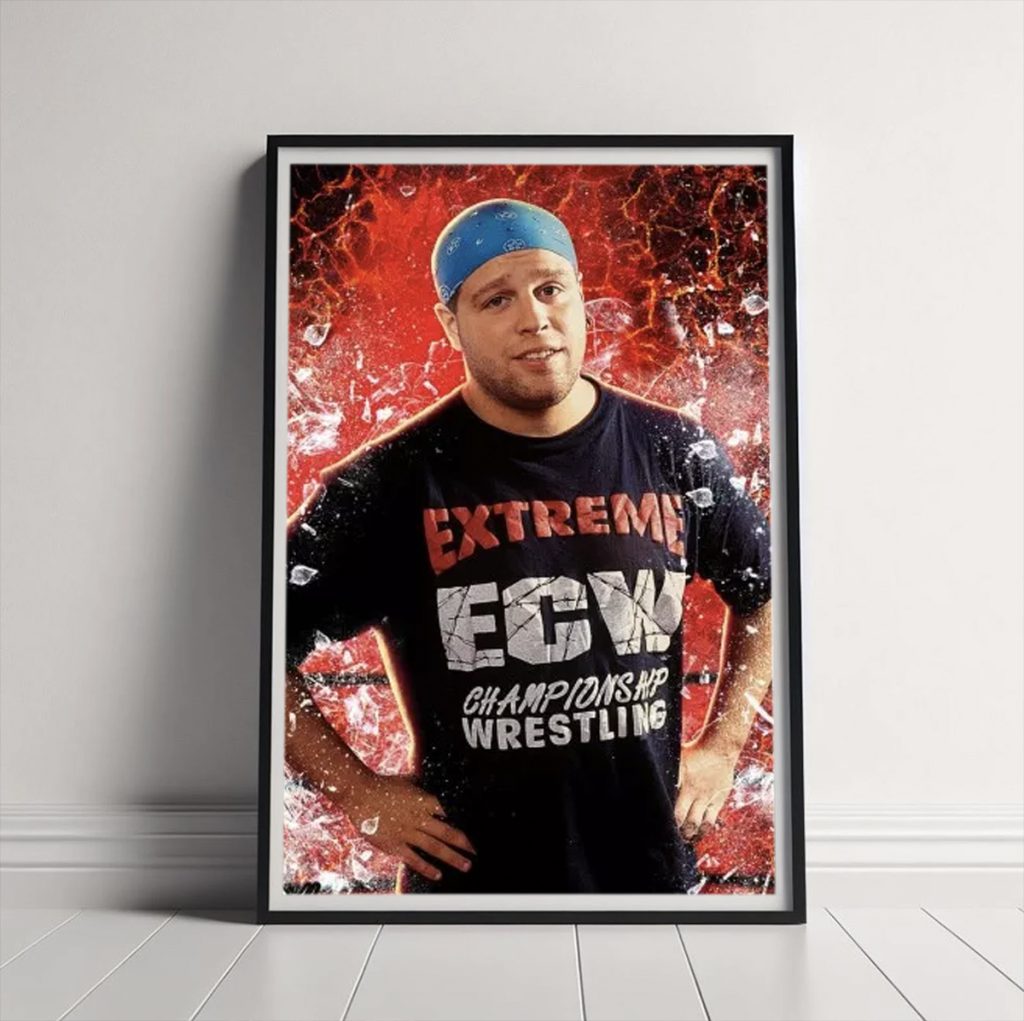
Mikey Whipwreck
Wrestler
About Mikey Whipwreck
Mikey Whipwreck – Buffalo’s Wrestling Underdog Turned Champion
Buffalo, NY, has produced its fair share of athletes whose stories inspire, but few embody the Cinderella tale quite like Mikey Whipwreck. Born John Michael Watson on June 4, 1973, Whipwreck’s remarkable rise from a member of a wrestling ring crew to an Extreme Championship Wrestling (ECW) Triple Crown Champion is a testament to perseverance, humility, and the power of the underdog spirit. Whipwreck’s path to success didn’t just make waves in professional wrestling—it became a legacy tied to the grit and determination of his Buffalo roots.
From Ring Crew to Wrestling Star
Mikey Whipwreck’s story began in Buffalo, where his love for wrestling fueled his dream of stepping into the squared circle. Early on, Whipwreck worked as part of ECW’s ring crew, setting up matches and practicing moves in the ring only after the shows had ended. His passion caught the attention of ECW booker Paul Heyman, who allowed him to join the roster after noting his potential.
Initially an enhancement talent, Whipwreck’s size—he stood at 5’7” and weighed roughly 187 pounds—often placed him in situations where he was meant to lose matches. But it was precisely this “everyman” quality that endeared him to fans. Mikey became the ultimate underdog, a scrappy fighter who refused to give up, earning him opportunities bigger than anyone expected.
Championship Success in ECW
Mikey Whipwreck’s career skyrocketed in the mid-1990s as he became one of ECW’s breakout stars. His first major success came in 1994, when he captured the ECW Television Championship after defeating The Pitbull despite having no offensive moves during the match. This win solidified his character as an underdog that fans could rally behind.
Later that year, he teamed with wrestling legend Cactus Jack (Mick Foley) to win the ECW World Tag Team Championship, further cementing himself as a fan favorite. What made Whipwreck’s ascent unique was his relatability. Fans resonated with his struggle against bigger and stronger opponents, watching him triumph through sheer heart and determination.
Whipwreck reached historic heights in 1995 when he captured the ECW World Heavyweight Championship, defeating The Sandman in a thrilling ladder match. At only 22 years old, Whipwreck became the youngest ECW World Heavyweight Champion—a milestone that emphasized his ability to turn the impossible into reality. He later added two more World Tag Team Championships to his name, including one alongside Japanese wrestling icon Yoshihiro Tajiri during their run as the popular “Unholy Alliance.”
Contributions Beyond Titles
Mikey Whipwreck’s impact on professional wrestling extends far beyond his championship wins. His underdog persona inspired fans and fellow wrestlers alike, breaking the mold of what a champion could look like in an era dominated by towering, muscle-bound stars. Beyond his on-screen character, Whipwreck’s work ethic and willingness to push himself in the ring earned him the respect of his peers.
After ECW’s closure in 2001, Whipwreck continued to give back to the wrestling community by transitioning into the role of a trainer. Many of today’s wrestling stars, including AEW’s Matt Cardona (formerly Zack Ryder) and Tony Nese, have credited Whipwreck as an integral part of their development. His training style emphasized mastering fundamentals while fostering creativity—key traits that defined his own career.
Whipwreck also used his influence to advocate for innovation in wrestling. He was part of some of ECW’s most memorable and hard-hitting matches, popularizing high-risk moves and extreme stipulations that pushed the boundaries of entertainment.
A Buffalo Icon
For Buffalo, Mikey Whipwreck remains a symbol of resilience and tenacity. Fans remember him not just for his victories but for what he represented—a fighter who thrived on heart and determination rather than size or strength. His success helped shine a spotlight on Buffalo and its contributions to the wrestling world, inspiring a new generation of athletes from the Queen City to pursue their dreams.
Whipwreck’s ability to connect with audiences made him beloved not only in ECW but across the wrestling community. Whether it was his comedic timing, relatable personality, or heart-stopping performances, Whipwreck became an unforgettable figure for anyone who followed wrestling during the 1990s and early 2000s.
Ongoing Influence and Recognition
Though semi-retired, Mikey Whipwreck remains an influential voice in wrestling. He works with All Elite Wrestling (AEW) as a trainer and global ambassador, sharing his wealth of experience with up-and-coming stars. His candid conversations about the struggles of professional wrestling—both physically and emotionally—have reinforced his reputation as a humble and relatable figure in the industry.
Whipwreck’s impact on wrestling is evident in the continued appreciation for his matches and storylines, particularly among fans of ECW, where his legacy as one of the promotion’s greatest Triple Crown Champions lives on. His inclusion as a playable character in the WWE 2K16 video game showcases how his contributions remain celebrated even long after his in-ring prime.
A Lasting Legacy
Mikey Whipwreck’s story is one of perseverance, proving that success comes to those who refuse to give up. From Buffalo’s streets to the ECW arena, he brought his signature blend of heart and humility to every match, inspiring his fans and peers alike.
As wrestling evolves, Mikey Whipwreck’s story continues to serve as a reminder that champions aren’t only defined by strength or size but also by their will to succeed. Whether through his legendary underdog moments or his lasting influence as a coach, Whipwreck ensures Buffalo’s name remains deeply tied to the world of professional wrestling—a legacy of grit, determination, and heart.