
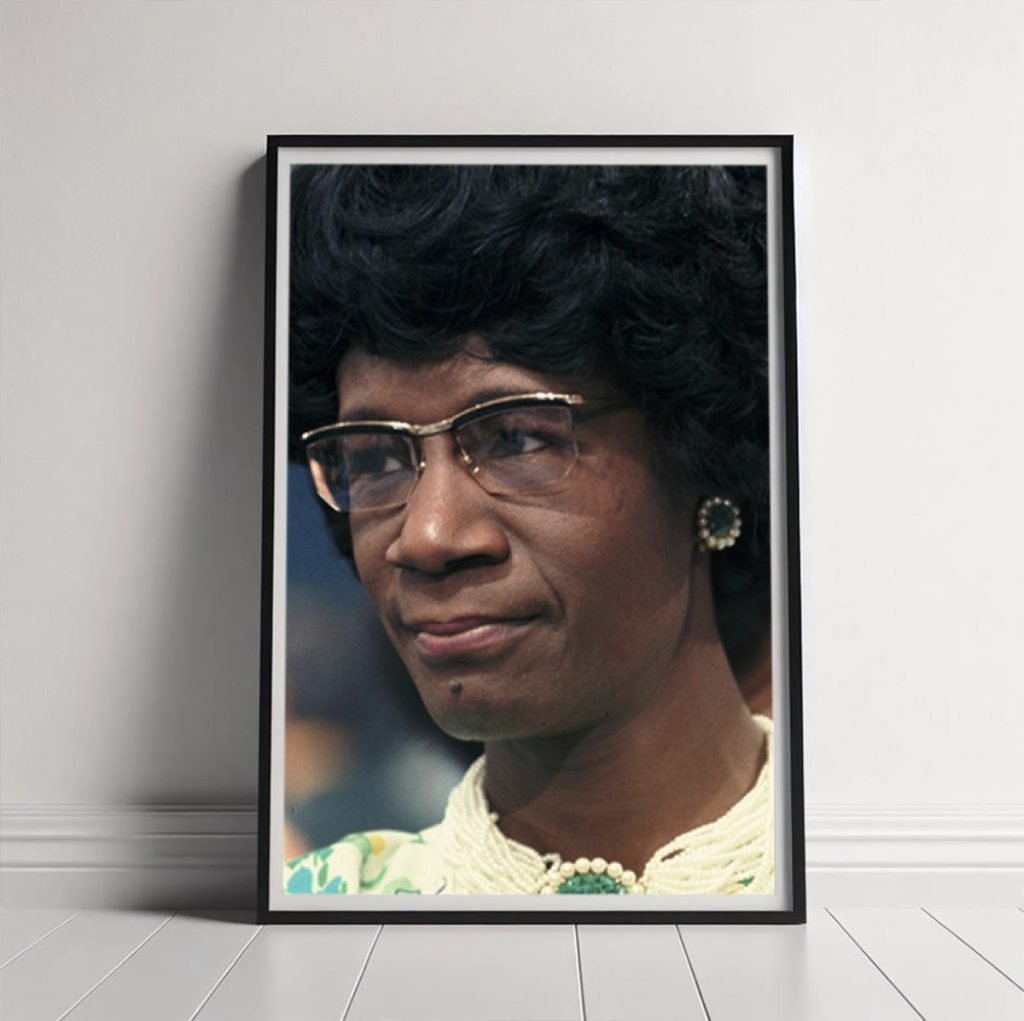
Shirley Chisholm
Politician
About Shirley Chisholm
Shirley Chisholm: A Trailblazing Icon with Buffalo Roots
Shirley Chisholm, born on November 30, 1924, stands as one of the most iconic figures in American history. She shattered barriers, defied expectations, and inspired countless individuals through her groundbreaking career in politics and civil rights. Though widely celebrated as the first African American woman elected to the United States Congress and a bold presidential candidate, Chisholm’s ties to Buffalo, New York, are an integral part of her story, shaping the values and resilience that defined her incredible life.
Early Life and Buffalo Connections
Shirley Anita St. Hill was born in Brooklyn, New York, to immigrant parents from the Caribbean. Shortly after her birth, Shirley spent several formative years living with her grandmother in Barbados, an experience that instilled in her self-discipline and a deep appreciation for education. After returning to the United States, she grew up in New York City, where she excelled academically and developed an unwavering passion for justice.
Buffalo entered Shirley Chisholm’s story through her college years. She attended Buffalo State College, earning her Bachelor of Arts degree in 1946. While at Buffalo State, Shirley studied sociology and became increasingly aware of the systemic inequalities that affected marginalized communities. It was during her time in Buffalo that Shirley began to understand the power of using education and advocacy to challenge entrenched social injustices.
Buffalo, with its diverse population and industrial landscape, gave Shirley insight into the struggles faced by working-class individuals and communities of color. Her experiences in the city—both in the classroom and beyond—cemented her commitment to fighting for equitable opportunities and systemic change. These lessons would stay with her, shaping the fearless leader she would later become.
Firsts in the Fight for Justice
Shirley Chisholm made headlines in 1968 when she became the first African American woman elected to the United States Congress. Representing New York’s 12th Congressional District, Chisholm approached her role with boldness and unapologetic authenticity. Her campaign slogan, “Unbought and Unbossed,” perfectly captured her independent spirit and dedication to standing against political corruption.
During her seven terms in Congress, Chisholm championed issues such as civil rights, education, and healthcare. A tireless advocate for marginalized communities, she pushed for policies that expanded access to early childhood education, racial and gender equity in the workplace, and protections for domestic workers. She often reminded critics that her mission was to represent the underserved, famously declaring, “I am the people’s politician.”
But Chisholm’s trailblazing didn’t stop there. In 1972, she made history again as the first Black woman to seek the presidential nomination of a major political party. Her candidacy was groundbreaking—not only for its symbolic value but also for its boldness in challenging the status quo. Despite discrimination and limited campaign resources, she remained steadfast, taking a stand for issues often ignored by mainstream politics.
“Shirley Chisholm for President” wasn’t just a slogan—it was a movement, one that inspired women, people of color, and underrepresented individuals to see themselves as leaders and active participants in American democracy.
Anecdotes and Lesser-Known Stories
Shirley Chisholm’s life was full of compelling anecdotes that reflected both her strength and humanity. One lesser-known story involves her refusal to accept traditional gender roles or submit to societal expectations. When Chisholm entered Congress, she faced skepticism not just for her identity as a Black woman, but even for minor details—such as her refusal to “tone down” her fashion. She wore vibrant colors and bold styles that reflected her true self, declaring, “If they don’t like my style, they can’t vote me out for another two years.”
Another revealing moment came during her presidential run. Despite facing pushback from fellow politicians, Shirley broke barriers by collaborating with activists and organizations that often criticized mainstream politics. Her ability to unify diverse groups—spanning civil rights leaders, feminists, and young voters—is a testament to her skill as a visionary leader.
Her time in Buffalo also left a lasting impression. Chisholm remained grateful for the opportunities she received at Buffalo State College and often spoke warmly of her experiences there. It was in Buffalo that she first began the work that would define her career, combining community organizing with a deep commitment to equity.
Shirley Chisholm’s Legacy
Though Shirley Chisholm passed away in 2005, her legacy is alive and thriving. She opened doors that had long been closed, directly inspiring future generations of politicians and activists. Figures like Vice President Kamala Harris and former President Barack Obama often acknowledge the path Chisholm forged in their own historic careers.
Buffalo holds a special place in her story—a city that helped shape the woman who would challenge stereotypes and redefine political leadership. Today, Buffalo honors Shirley Chisholm as one of its brightest icons, a symbol of progress, courage, and determination. Her time in Buffalo reflects the city’s role as a place where bold ideas take shape and where the seeds of change are sown.
Shirley Chisholm once said, “Service is the rent we pay for the privilege of living on this earth.” Her life exemplified this philosophy, proving that one person’s dedication to justice can inspire change not just for a generation but for an entire nation. From her Buffalo roots to the halls of Congress and beyond, Shirley Chisholm’s voice continues to resonate—unbought and unbossed.eel the enduring impact of George Cary—a true icon of Buffalo’s architectural story.