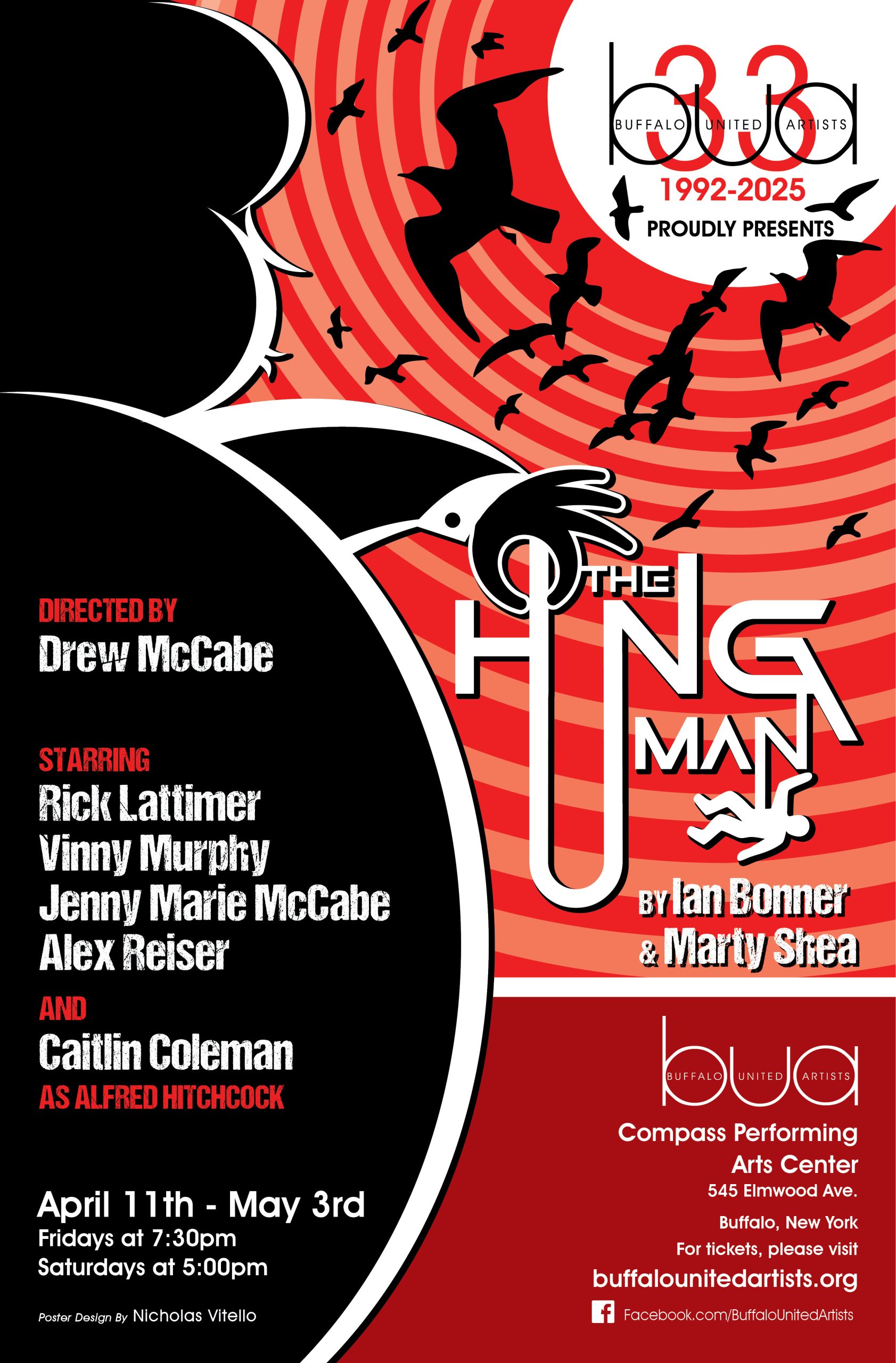
The Hung Man by Ian Bonner and Marty Sheas was a funny, well-intended, and well-paced production. While there were moments when it leaned a little too hard into parody and satire — that, arguably, was the point. After all, this was the campy “gaytire” it proudly set out to be.
For the uninitiated, “gaytire” — a genre-bending, queer theatrical homage — playfully satirizes classic cinema while celebrating its hidden subtexts and homoerotic undertones.
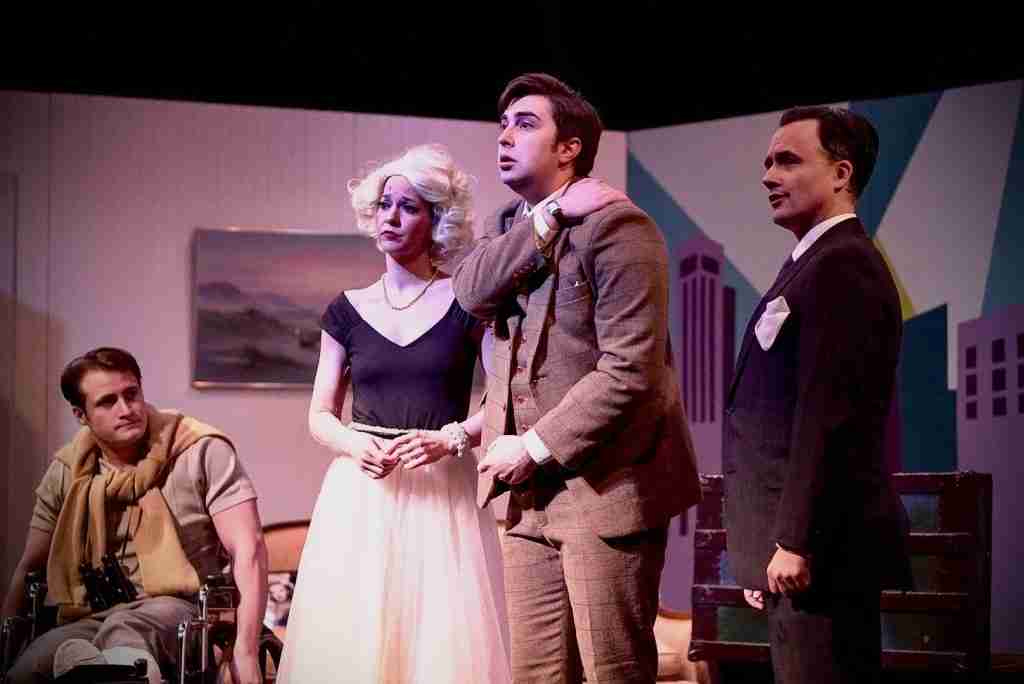
The show presents itself as a classic retelling of Alfred Hitchcock’s Rope, The Birds, and Rear Window. In the spirit of Hitchcock’s murder-mystery thrillers, this production might’ve offered him a way to better understand the interconnectedness of his characters’ sexual depravities — ones that were often diluted or buried, given the era in which his films were made. But this isn’t a film analysis of the Hitchcock universe — it’s a review of Buffalo United Artists’ regional premiere of The Hung Man, a story of two convening gentlemen who devise a plan to host a cocktail hour to explore the seductive nature of secrecy — and getting away with it.
Unlike Hitchcock’s original narratives, the secret hidden in the steamer chest is unlike any secret foretold.
In a night of banter, unhinged personalities, and delusional singing, the writer of this play makes no attempt to directly connect to the Hitchcock franchise but instead plays into gay tropes and homages with a wink to their familiarity.
The show itself was digestible, entertaining, witty, and just outright comical at times.
Directed by Drew McCabe, The Hung Man delivers a memorable night out for the hes, shes, theys, and beyond—inviting everyone to laugh along as the show playfully pokes fun at the often queer-coded storytelling found throughout Alfred Hitchcock’s cinematic universe. McCabe’s directorial choices, while subtle, shine through in the nuanced performances and character portrayals that pay homage to Hitchcock’s iconic figures. Leaning into familiar Hitchcock tropes, the show finds strength in its satirical and comedic elements, with the cast delivering spot-on timing that balances laugh-out-loud moments with occasional serious undertones—effectively grounding the production amid its gleeful overuse of puns and playful absurdity.
Hitchcock — played by Caitlin Coleman — also portrays the leading character’s mother, Mrs. Collier, an homage to Constance Collier, who played Mrs. Anita Atwater in Hitchcock’s Rope (1948). Coleman, as Hitchcock, delivers a snide, bantery, and playful version of the director, breaking the fourth wall as he promises an homage, not a parody, while recounting childhood reminiscences to the audience.
Later introduced is Mrs. Collier, whose cheeky, audacious personality makes no secret of her disdain for her son John. John — played by Rick Lattimer — is a clear homage to Hitchcock film actor John Dall in Rope. Perhaps this show is meant to be a behind-the-scenes look at what Hitchcock hoped his film could be before the producers stepped in. In the satirical manner of comedic biopics, this production serves as a funny night out for those looking for a playful mockery of gay culture.
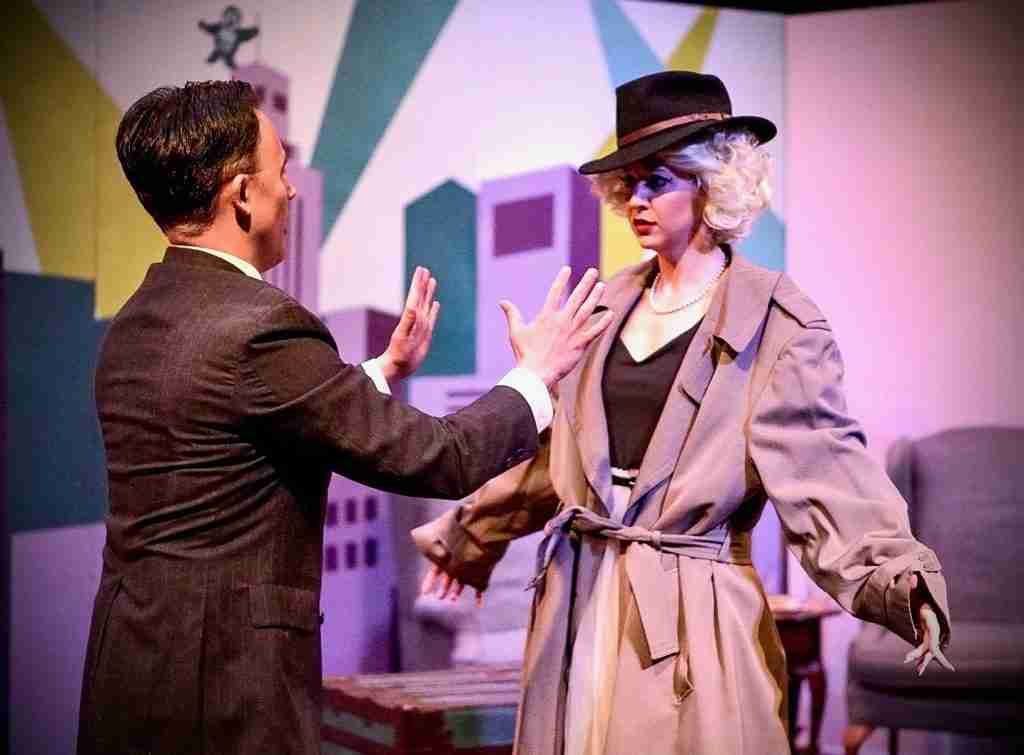
Lattimer, whose suave portrayal of John was met with contempt, performed a well-executed “straight boy played gay” character in his homage to Dall’s portrayal of Brandon in Rope. Dall’s Brandon — dark, cunning, and flirtatious — is met with admiration from Lattimer’s version of John. Lattimer gave a classic and intelligent performance, revering the character as a more accurate portrayal of Hitchcockian film noir.
Farley, played by Vinny Murphy, channels Farley Granger’s Phillip Morgan from Rope (1948), delivering an over-the-top queerness that elevates the character’s sexuality with showmanship and camp. Murphy’s unhinged performance stood out, especially when he read the other characters to filth while sipping away on his drink — a clear homage to Granger’s stylized portrayal under Hitchcock’s direction.
Grace — presumably a delightfully ditzy take on Grace Kelly, the iconic star of Rear Window (1954), Dial M for Murder (1954), and To Catch a Thief (1955) — certainly left her mark. Two of those films have been recently honored in the WNY theater scene. At Shea’s 710, Road Less Traveled Productions staged Dial M for Murder, where Kelly originally played the doomed and elegant Margot Wendice. In that production, Kate LaConti gave the role a more seriously comedic twist.
But the spotlight here belongs to Jenny Marie McCabe, who lit up Buffalo United Artists’ The Hung Man with razor-sharp, peak humor. Her “parodic homage” to Grace was delivered with elegance and flair. McCabe had the audience in stitches throughout — especially during Act II’s manic unraveling, when her character faced a full-blown, feather-fueled meltdown in a nod to The Birds. A nonstop chucklefest.
Alex Reiser, who played both Jimmy and Detective Carey, gave dual performances that nodded to multiple Hitchcock leads. Jimmy — a culmination of James Stewart’s characters from Rope and Rear Window (1954) — is portrayed as a brutish fraternity colleague who introduces Murphy’s and Lattimer’s characters, Farley and John, to the dark desires that loom over them as the night progresses. Reiser clearly immersed himself in the roles, delivering a refined and nostalgic homage through his transatlantic dialect.
As Detective Carey — presumably a nod to Stewart’s portrayal in Vertigo (1958) — Reiser leans into a comedic, campy, almost gay-baiting energy, particularly in his scenes with Murphy. His obsessive questioning about a man who allegedly hung himself with a cashmere scarf across the street is where the humor and camp really take flight.
Stage Manager Rebecca Ostrander delivered a head-butting moment when an audience member became the unfortunate victim of a rogue bird—meant to shatter the imaginary window. This unintended incident gave the audience the laugh of the night. I suppose no one is safe from the birds.
Costume Designer Isabel Urbanski-Farrell outdid herself in capturing the classic Hitchcock attire and atmosphere, designing costumes for multiple characters performed by a single actor. Coleman had three outfit changes, with memorable moments including her transformation into “Mother” from Hitchcock’s 1960 film Psycho, as well as McCabe’s character in her charming cocktail attire.
Brenna Prather (Wigs/Make-Up Designer) employed gentle and subtle makeup, which was well complemented by Roy Walker’s (Lighting/Sound Designer) lighting design. Coleman’s portrayal of Alfred Hitchcock was brought authentically to life with the use of a bald cap.
Stefanie Warnick (Fight/Intimacy Director & Sound Sourcing) delivered moments of anxiety, particularly in scenes involving characters in wheelchairs being roughly handled by others. Warnick’s direction stood out for its careful balance between intensity and safety.
The set was beautifully brought to life by Scenic/Prop Designer Mike Doben, who transformed the stage into a sophisticated New York City high-rise apartment, evoking the elegance of 1950s condo living.
Additional support was provided by the unsung heroes: Steve Harter (Technical Director), Kieran Deyell and Aidan Deyell (Technical Assistants), and Jess Scibetta (Scenic Painter).
For those seeking a hardy hard, laugh out loud moment of joy, The Hung Man is the show for you, please be advise that the show does make light of often heavy and sensitive topics, such as race, suicide, and sexuality. Content Warning as provided by playbill, “suggestive language & Scenario, including verbal references of suicide.
As recognition and social responsibility National Suicide Prevention Lifeline number is provided, and this writer will add 988 as addition.
Buffalo United Artists’ The Hung Man by Ian Bonner & Marty Shea can be viewed at the Compass Performing Arts Center – 545 Elmwood Ave. Buffalo, NY from April 11th – May 3rd with shows on Fridays at 7:30 PM and Saturdays at 5:00 PM – parking is off street so make sure to give yourself time to get there park and enjoy a nice drink at the theaters concession room. Tickets can be purchased by visiting buffalounitedartists.org or at the box office at the theater.