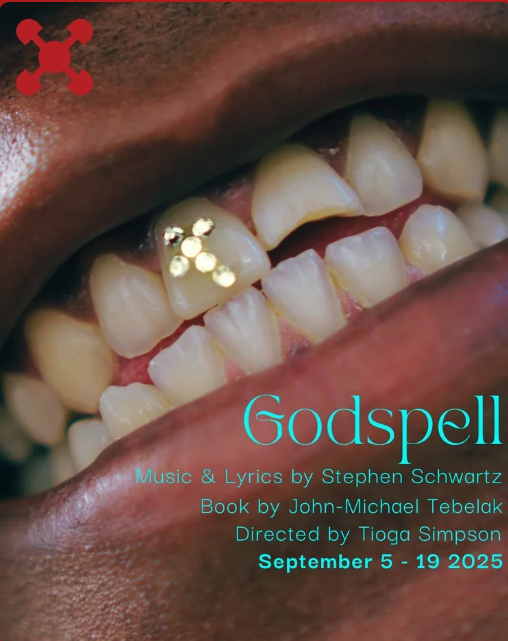
Reviewed by Steven Maisonet
I am not at all familiar with Godspell beyond its brief mention in the Netflix version of The Prom, so bear with me as I adjust to this splendid show. My partner—who informed me this would be his fourth time seeing a Godspell production—graciously did me the favor of experiencing it with no spoilers.
I often cringe at religiously based works (Jesus Christ Superstar included). Why anyone would want to watch something so overtly religiously coded is beyond me—yet the truth is, these shows sell, and people love them. After seeing Ujima’s production of Godspell, directed by Tioga Simpson, I can understand why. Perhaps it isn’t about the retelling of an overplayed story, but about how it’s shaped for the audience and presented in a way that feels versatile opening the door for other stories to emerge.
Ujima’s staging infuses Stephen Schwartz’s musical with a punk-grunge aesthetic. From vibrant essence of ’70s-inspired costuming to aerodynamic, gender-defying casting, the show expands beyond Jesus’s parables as depicted in the Book of Matthew to deliver a theatrical spectacle underscored by a message of love and kindness. The players, tasked with portraying themselves (literally—just look at the playbill), embodied these parables through their own unique personalities. Among the cast, we are introduced to Cordell Hopkins as Jesus and Curtis Lovell as Judas.
Ujima, now on a two-show streak of metaphysical inquiry—having closed last season with Everybody and opened this one with Godspell—continues to challenge its audiences to consider the roles we play in this vast world, especially when faced with moments of judgment.
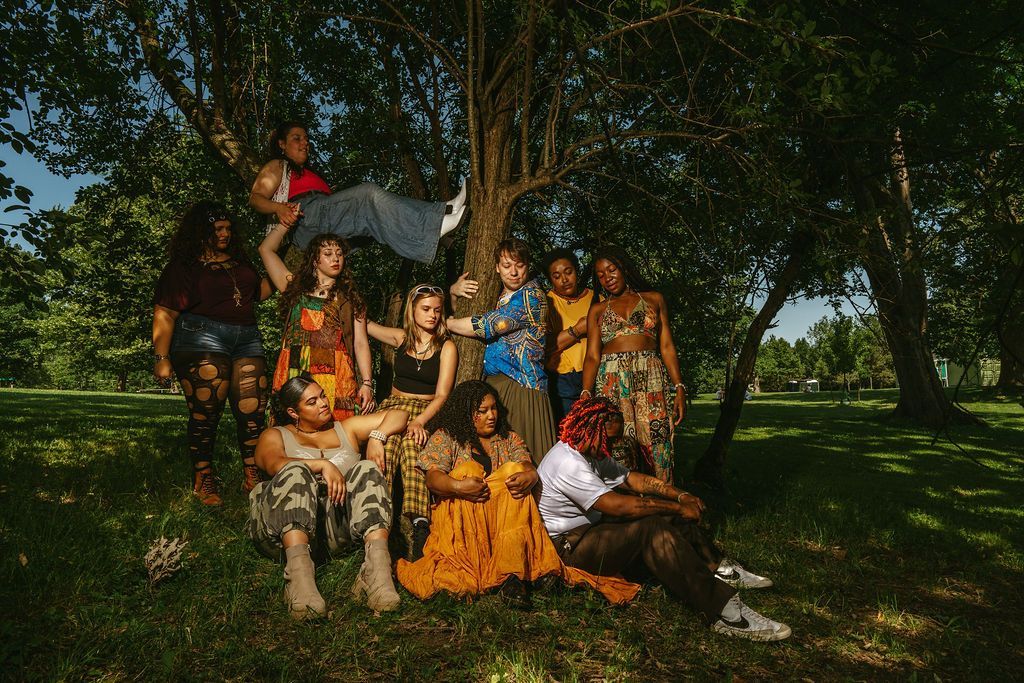
The show, presented in two acts with a 15-minute intermission, also offers an exhilarating glimpse into what it feels like to be part of a troupe. Simpson, in their directorial vision, fulfills the promise of adapting Godspell to fit Ujima’s space: inclusive, vibrant, and socially conscious. Rather than presenting the work as a purely religious retelling, Simpson highlights its contemporary relevance. In an era of global uncertainty, themes of love and peace feel not only resonant but urgent. This was brought into sharp relief through a hilarious and pointed reimagining of Trump’s Lazarus, which crystallized the production’s larger point: this show is not just about religion, but about joy amid uncertainty. Simpson gave the audience something rare and valuable—a moment of hope.
Choreography by Derian Brown further enlivened the production. Though movement was not the show’s primary focus, Brown’s contributions stood out in moments such as tap sequences and an aerial-inspired number performed by Brown and Lexus Hale. These choices added symbolic layers of freedom and fluidity without tipping into excess. The choreography was playful and purposeful—though the exertion was evident, as ensemble members often found themselves catching their breath mid-performance.

Technically, the production faced challenges. While every performer had a strong presence, uneven sound design occasionally disrupted the balance. Shifting microphones, heavy breathing, and moments of lost audio detracted from otherwise powerful vocal performances. At times, the live band overpowered the ensemble. In a space as intimate as Ujima’s, a more integrated staging of the musicians could help resolve these imbalances in the future.
Still, these issues did not overshadow the strength of the ensemble. Each performer had their chance to command the spotlight with their interpretation of the parables. Among the standouts was Lexus Hale—last seen by this reviewer as Veronica Sawyer in Buffalo State’s Heathers, opposite Cordell Hopkins as JD. Hale, who has matured impressively since her pre-BFA years, dazzled the audience in “Learn Your Lessons.” Vocally assured and dramatically vibrant, she proved herself a force to watch.
Another memorable performance came from Arianna Morris, whose rhythmic and captivating “Turn Back, O Man” left the audience eager for more. Kristen-Marie Lopez brought warmth and sincerity, layering generosity into their performance of “We Beseech Thee.” Timiyah Love displayed her trademark storytelling finesse, crafting a performance even more mesmerizing than her recent role in Lancaster Opera House’s Crazy for You.
Emory Redfearn offered tenderness and depth in both vocal and acting choices, especially in her performance of “Bless the Lord,” while Aaron Gabriel Saldana, stylishly attired, impressed with “All Good Gifts.” Finally, Gabriella McKinley—exuding TLC and En Vogue energy—delivered with charisma, precision, and irresistible stage presence, offering a wonderful rendition of “Day by Day.”
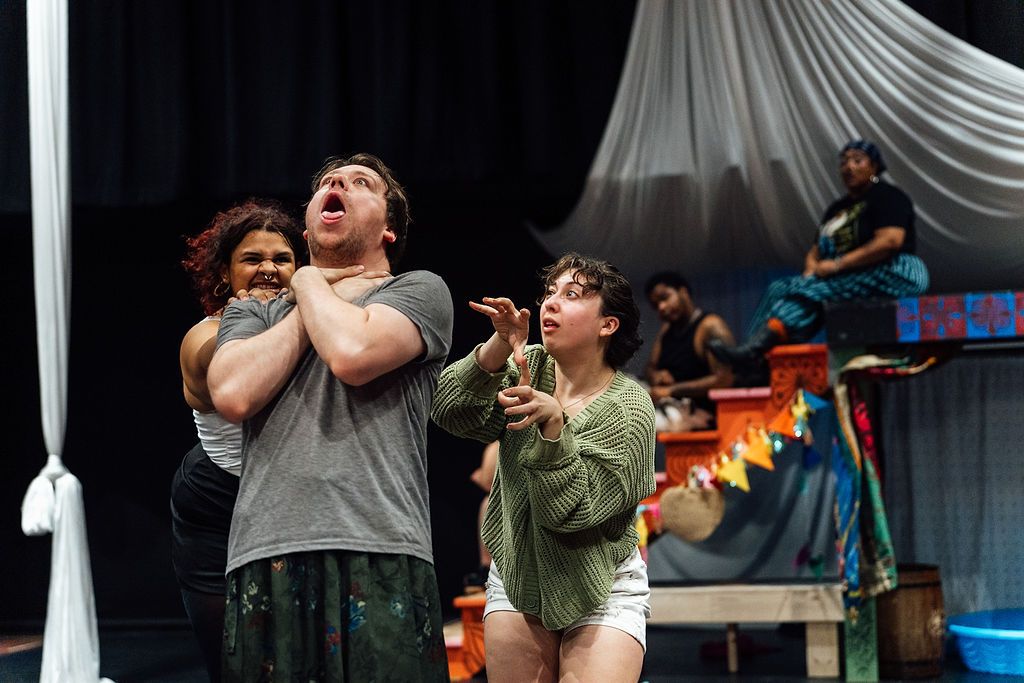
Taken as a whole, Ujima’s Godspell transcends its religious source material, offering a production that feels contemporary, socially attuned, and deeply human. With Simpson’s assured directorial debut and an ensemble brimming with talent, the company has set a high bar for the season ahead.
Ujima opens its 47th season with the iconic musical Godspell by John-Michael Tebelak, featuring music and lyrics by Stephen Schwartz. This uplifting production brings together an eclectic group of individuals to tell timeless parables through song, dance, and joy. With its message of hope and unity, Godspell promises to be a joyous celebration of faith, love, and community. Godspell runs September 5–19, 2025. Tickets can be purchased at https://www.ujimacoinc.org.