
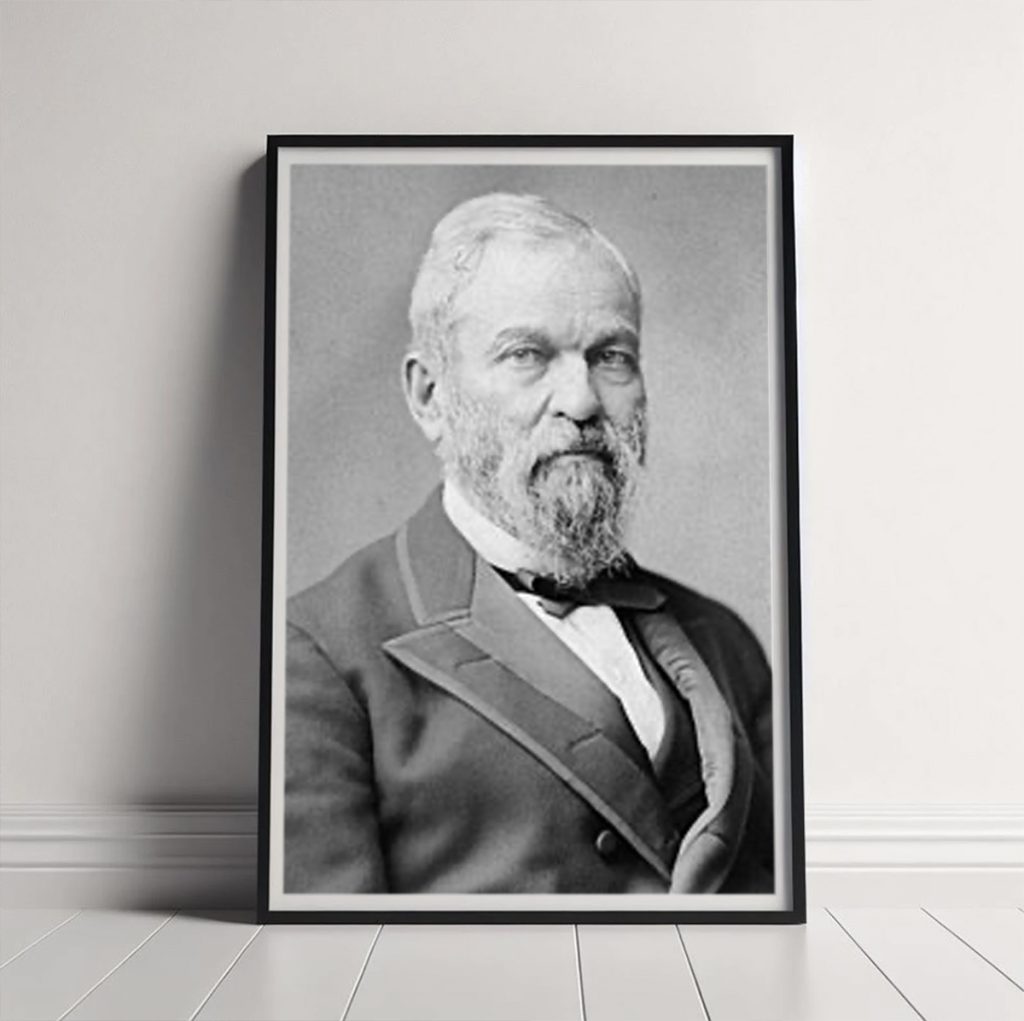
William Fargo
Businessman
Politician
27th Mayor of Buffalo
About William Fargo
William Fargo: The Legacy of Buffalo’s Visionary Icon
Buffalo, NY, is a city rich with history, innovation, and determined individuals who have shaped its identity. Among its most iconic figures is William Fargo, a trailblazing businessman, financial pioneer, and public servant whose contributions extended far beyond the city he called home. Born on May 20, 1818, Fargo’s life was marked by extraordinary achievements, from co-founding groundbreaking companies like American Express and Wells Fargo to leading Buffalo as its mayor during a pivotal era. Today, his legacy endures as a testament to vision and determination.
Early Life and Humble Beginnings
Born in Pompey, New York, William George Fargo grew up as the eldest of twelve children in a family facing modest means. His formal education ended at the age of 13, when he took on a job as a mail carrier, riding horseback to deliver letters in his rural hometown. Despite these humble beginnings, Fargo exhibited a relentless work ethic and a natural aptitude for enterprise.
Fargo moved to Buffalo in 1843 to work as a freight agent for what was then the Auburn and Syracuse Railroad. His time in Buffalo proved pivotal, as the city became the launchpad for his remarkable success in the express and banking industries. He quickly gained experience in logistics and transportation, positioning himself at the forefront of an industry undergoing rapid transformation as America expanded westward.
Co-Founding American Express and Wells Fargo
One of William Fargo’s most enduring accomplishments was his role as a co-founder of two financial giants—American Express and Wells Fargo & Company.
In 1850, Fargo partnered with industry visionaries Henry Wells and John Butterfield to merge their express companies into a single entity—American Express. The company specialized in secure delivery of goods, parcels, and financial instruments. Fargo’s logistical expertise helped streamline operations during a time when cross-country transportation was notoriously difficult and unreliable.
However, when the California Gold Rush began in earnest, many expressed frustration over the lack of financial services on the West Coast. To bridge this gap, Fargo and Wells founded Wells Fargo & Co. in 1852. The company not only provided express services but also banking operations, cementing its reputation as a lifeline for miners and settlers during America’s westward expansion. Wells Fargo became synonymous with trust, reliability, and innovation—a reputation that continues to this day.
Leadership as Mayor of Buffalo
William Fargo’s contributions weren’t limited to the financial world—he also worked tirelessly to improve the city of Buffalo. Elected as the city’s 27th mayor in 1862, Fargo served two terms through 1866. His leadership during this period was crucial, as Buffalo was growing both in population and industry, requiring forward-thinking governance.
A lifelong Democrat, Fargo stood firmly in support of the Union during the Civil War. He allowed employees from his companies to serve in the military, paying part of their salaries while they were on duty—an emblem of his dedication to both civic and national responsibility.
Fargo’s tenure as mayor coincided with notable civic development. His commitment to Buffalo’s growth paralleled the spirit of innovation he championed in his business dealings. Under his leadership, Buffalo continued to develop as a key transportation and industrial hub, solidifying its status as a critical city during America’s 19th-century expansion.
Building the Grand Fargo Mansion
Never one to shy away from ambition, Fargo also made his mark on Buffalo’s physical landscape. Between 1868 and 1872, he built the Fargo Mansion, a stunning residence that stretched across two city blocks and was the largest home in Buffalo at the time. The mansion embodied the grandeur of 19th-century success, featuring elements like a five-story central tower, wood sourced from across the United States, and luxuries such as an elevator and ornate gold doorknobs. Though the mansion was eventually demolished, its creation reflected Fargo’s larger-than-life vision and his ties to the city that had helped him thrive.
Enduring Legacy in Buffalo and Beyond
William Fargo passed away in 1881, but his influence on Buffalo and the nation remains profound. He is buried in Buffalo’s historic Forest Lawn Cemetery, a site that reflects the city’s respect for the figures who defined its past. Fargo Avenue, the Fargo Quadrangle at the University at Buffalo, and even the naming of Fargo, North Dakota, are enduring reminders of his legacy.
Buffalo proudly celebrates Fargo’s indelible contributions to both the city and the broader financial world. His work in founding and leading companies like American Express and Wells Fargo helped lay the foundation for modern financial services, while his time as mayor demonstrated his commitment to community and progress.
William Fargo’s story is a testament to the power of determination, innovation, and vision. From humble beginnings to global influence, his legacy stands as a tribute to both Buffalo’s resilience and the enduring spirit of one of its most celebrated icons.