
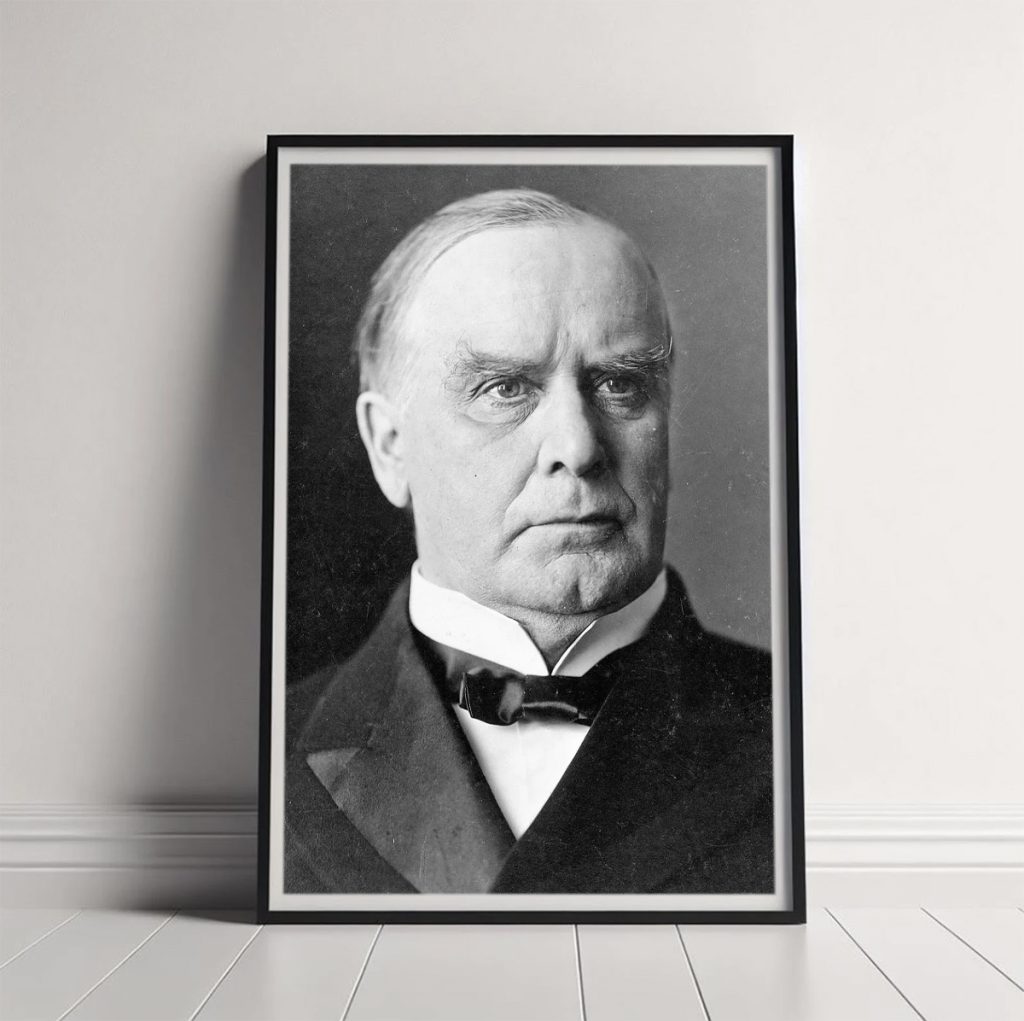
William McKinley
25th president
About William McKinley
William McKinley: A Presidential Icon in Buffalo’s History
Buffalo, NY, a city rich in history and culture, carries a significant connection to one of America’s presidents, William McKinley. While his legacy spans the nation, Buffalo holds a unique place in the story of McKinley’s life and presidency. Through triumph and tragedy, his time in the city left an indelible mark on its historical identity and continues to shape how he is remembered today.
McKinley’s Presidency and the American Spirit
Before exploring the events in Buffalo, it’s important to understand why McKinley’s presidency was pivotal. Elected as the 25th President of the United States in 1896, McKinley led the country through a time of rapid industrialization and global expansion. His presidency was marked by significant accomplishments, including guiding the nation through the Spanish-American War and championing economic growth.
Known for his commitment to protecting American industry and promoting international trade, McKinley helped usher in an era of prosperity. He stood for stability and progress, making him a beloved leader for many during his time in office.
The Pan-American Exposition and McKinley’s Visit
Buffalo, already a bustling hub of innovation and architecture in the early 1900s, was chosen to host the Pan-American Exposition in 1901. This world fair was a grand celebration of progress, showcasing advancements in electricity, transportation, and culture. It attracted visitors from across the globe, eager to marvel at the future of technology and industry.
President McKinley was invited to deliver a speech at the exposition, solidifying his role as a symbol of American progress and optimism. On September 5, 1901, McKinley addressed a crowd of over 50,000 people from the Temple of Music, expressing his vision for a united, prosperous nation. His speech resonated with the spirit of the exposition, emphasizing peace, trade, and the potential for human achievement.
A Tragic Turning Point
Just one day later, on September 6, tragedy struck. While greeting visitors in the Temple of Music, McKinley was shot by anarchist Leon Czolgosz. The assassination shocked the nation and shattered the celebratory atmosphere of the exposition.
Despite receiving immediate medical attention and initial hopes for recovery, McKinley succumbed to his wounds on September 14, 1901, in the Milburn House, where he had been recovering in Buffalo. Vice President Theodore Roosevelt then assumed the presidency, marking the abrupt end of one era and the beginning of another.
Buffalo’s Memorials to William McKinley
The events surrounding McKinley’s assassination left a permanent mark on Buffalo’s history, and the city has ensured his memory endures. The McKinley Monument in Niagara Square stands as a powerful tribute to the fallen president. Erected in 1907, the towering obelisk is complemented by a circular fountain and sculptures symbolizing Buffalo’s mourning and respect for McKinley’s legacy.
The McKinley Monument also serves as a prominent feature in Buffalo’s civic landscape, surrounded by important government buildings that reflect the spirit of public service McKinley exemplified.
Visitors to the city can also explore the Buffalo History Museum and the Theodore Roosevelt Inaugural Site, which preserve critical pieces of history from that tumultuous time. These sites recount McKinley’s assassination, the aftermath, and Roosevelt’s swearing-in as the 26th president.
McKinley’s Lasting Impact on Buffalo
Buffalo’s identity as a historical city is deeply tied to the events of McKinley’s assassination. While the tragedy brought the city national attention, it also left behind a legacy of resilience. The preservation of memorials, historical sites, and artifacts has made Buffalo a destination for those seeking to understand not only the life and death of William McKinley but also the broader context of American progress at the turn of the century.
McKinley is remembered as a president who championed peace and prosperity, while his untimely death serves as a reminder of the fragility of leadership and the sacrifices borne by those in public service. His connection to the Pan-American Exposition further highlights Buffalo’s role in celebrating innovation and culture during an era of transformation.
Remembering McKinley Today
For Buffalonians and history enthusiasts alike, William McKinley remains more than a figure of the past—he is a symbol of both the city’s historical significance and its capacity to memorialize the moments that have shaped the nation. Whether visiting the McKinley Monument or reflecting on his impact at local historical sites, McKinley’s legacy continues to inspire conversations about leadership, progress, and the city’s place in American history.
William McKinley’s time in Buffalo may have been brief, but the city honors his legacy with enduring respect and reflection, ensuring that his contributions remain a part of its rich tapestry. Through its monuments, museums, and remembrance, Buffalo keeps the story of McKinley alive for generations to come.